Susan
Susan  2026-09-14


Engine diagnosis often begins with symptoms that can be heard, measured, or felt, while the surface that matters remains hidden inside a narrow cavity. A technician may need to examine a combustion chamber, inspect an evaporator area, look into a gearbox-related access point, or evaluate another space that cannot be viewed directly. Taking components apart before gathering visual evidence can increase labor and extend the diagnostic process. A video borescope changes the order of work by allowing the team to inspect first, document what is visible, and then decide whether further disassembly or testing is justified.
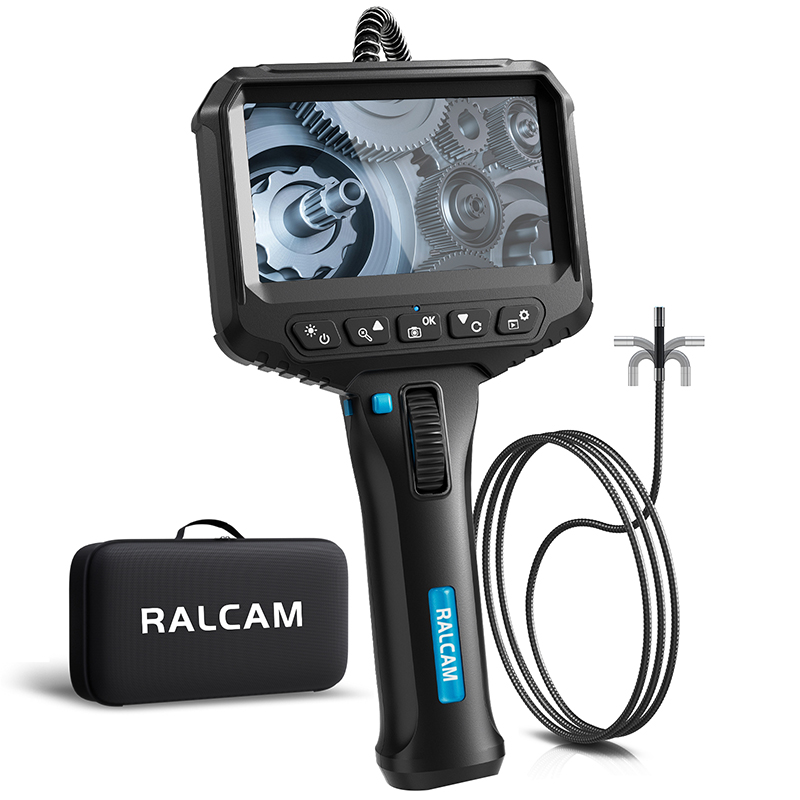
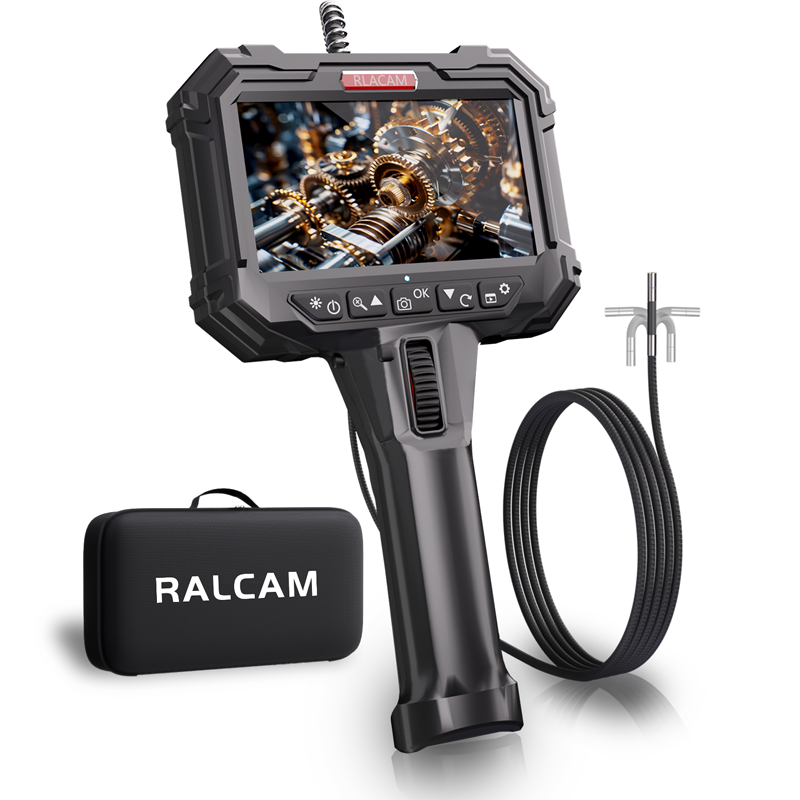
The RALCAM F408B is designed for this kind of controlled visual access. Its product information combines an integrated display, an articulated camera probe, adjustable illumination, Wi-Fi viewing, and automatic temperature protection. Those functions support a practical inspection sequence without claiming to replace service procedures, measurement instruments, or professional judgment. The borescope supplies another source of evidence. Its value depends on careful probe handling, a defined inspection objective, and a clear record of where each image was captured.
The F408B product page lists an 8.5 mm camera probe and 2 million pixels. The detailed description identifies a 4.5-inch IPS monitor, a 1 m cable, six LEDs, three brightness levels, and a 6000 mAh battery. It also lists a 15–100 mm depth-of-field range and an expected working time of four to five hours. These values give buyers a concrete operating profile to compare with their own access points, working distances, and inspection schedules.
Probe diameter is one of the first suitability checks. An 8.5 mm probe must fit the intended opening without force and still leave enough clearance for safe movement. The listed 1 m cable provides reach for common workshop and equipment inspections while remaining manageable near the operator. The depth-of-field range provides guidance for positioning the camera relative to the target. If the lens is held too close or too far away, useful detail can decline even when the display and image sensor are working correctly.
The integrated 4.5-inch IPS screen keeps the live view at the inspection point. This can simplify work when the technician needs one hand on the main unit and the other controlling the cable. The product details also describe Wi-Fi compatibility with iOS, Android, and iPad devices, allowing simultaneous mobile viewing. A second screen can help a colleague follow the inspection or give the operator another way to review the visible condition, provided the compatible device and connection are prepared before work begins.
A fixed forward-view camera can only show what lies directly in front of the probe. Engine cavities, evaporator housings, pipes, and mechanical assemblies frequently contain bends or surfaces located beside the insertion path. The F408B description specifies two-way 180-degree steering. This allows the operator to change the camera direction after the probe enters the access point instead of repeatedly withdrawing and reshaping the cable.
Controlled articulation matters more than rapid movement. The technician should advance the probe gradually, observe the screen continuously, and make small steering corrections. The listed bending radius of 2.5 cm provides another reference for planning access. Steering should never be used to force the probe around an obstruction. When the viewing direction changes, the operator should confirm the probe remains free to move and that the visible image corresponds to the expected location.
The combination of articulation and the integrated display supports a systematic search pattern. The operator can establish an initial forward view, steer toward one side, inspect a surface within the stated working distance, return toward center, and then inspect the opposite direction. This method reduces random movement and makes it easier to relate captured images to a known probe position.
Dark cavities require illumination, but more light is not always better. The F408B product details list six LEDs and three adjustable brightness levels. A moderate starting level can help the operator find the target without creating excessive reflections. Brightness can then be raised for dark, nonreflective areas or reduced when polished metal, liquid, or close surfaces cause glare. Adjusting the light while keeping the probe stable often improves the view more effectively than moving the camera repeatedly.
The listed 2MP imaging specification supports visual documentation, but resolution is only one part of usable image quality. Camera distance, focus range, lighting, probe stability, and surface condition all affect what the operator can interpret. Before recording an observation, the technician should pause, center the feature of interest, adjust illumination, and confirm that the image represents the intended location. Images should be labeled or logged with the access point and inspection objective so another team member can understand their context.
Inspection environments may retain heat even after machinery has stopped. The F408B summary and product details describe automatic temperature detection and power-off protection above 90 degrees Celsius. This protection is intended to help avoid camera damage when the probe encounters excessive temperature. It should be treated as an additional device safeguard, not as permission to insert the camera into an environment that has not been assessed.
Normal safety controls remain essential. Operators should isolate equipment as required, allow components to cool, check for moving parts and electrical hazards, and follow the instructions for the machine and borescope. If temperature conditions are uncertain, use an appropriate measurement method before inserting the probe. A protection feature can respond to a threshold, but it cannot replace planning, personal protective equipment, or site-specific procedures.
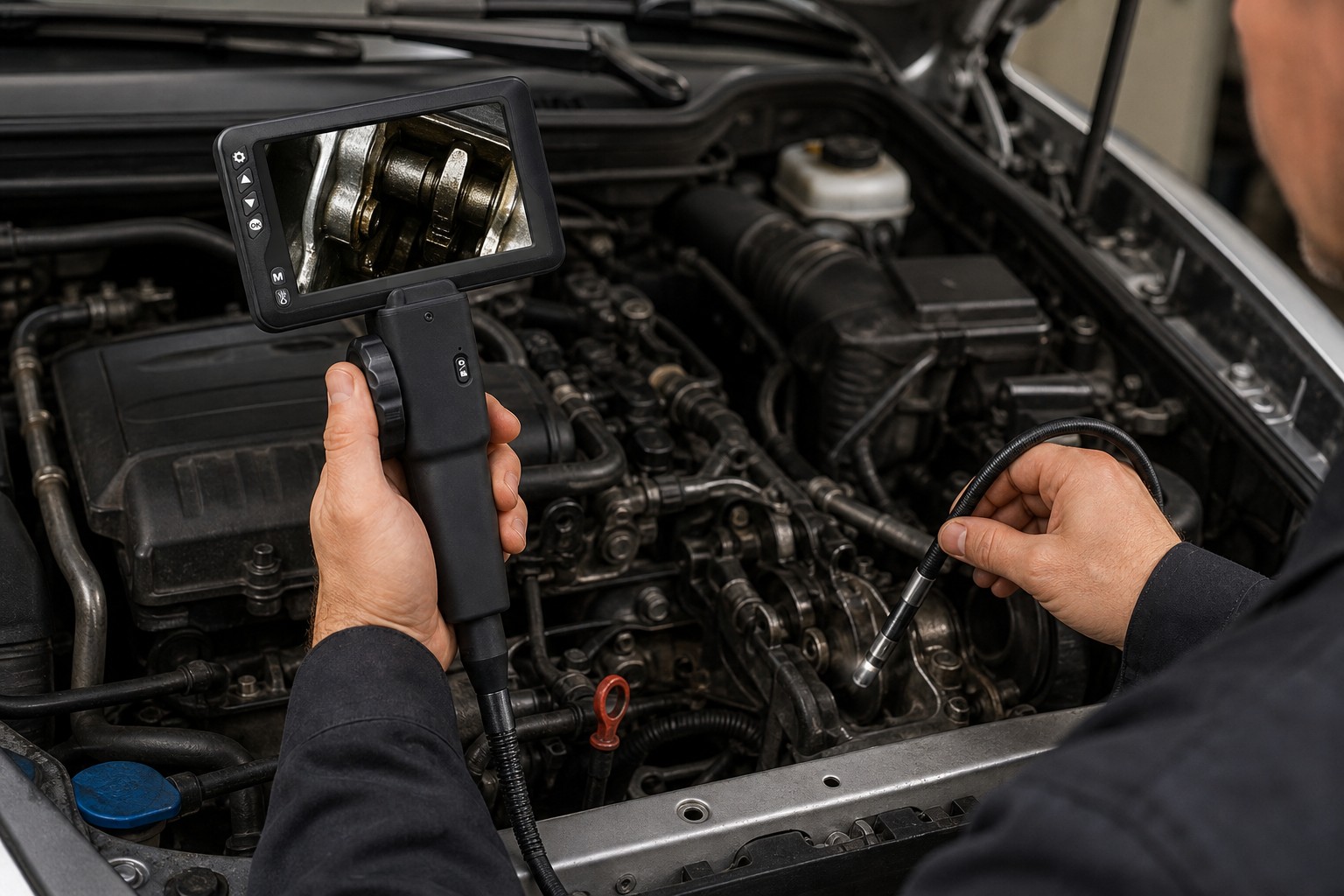
The product page identifies cars, ships, and aircraft engines as application areas. In automotive service, the F408B may help a technician view difficult-to-reach engine regions, combustion chambers, catalytic-sensor areas, or an air-conditioning evaporator space when a suitable access route is available. The objective is to look for visible evidence that informs the next step, such as deposits, contamination, obstruction, or a surface condition that deserves closer evaluation.
Marine and aircraft-engine maintenance also involve confined spaces, but each environment has its own procedures, access restrictions, and documentation requirements. The borescope must be evaluated against those requirements before use. Probe diameter, cable reach, material compatibility, temperature, cleanliness, and foreign-object controls may all influence suitability. The F408B provides visual inspection capabilities; qualified personnel remain responsible for deciding how the tool fits into an approved maintenance process.
Across these applications, consistent technique improves the value of the result. A clear inspection question, a known access point, gradual probe movement, controlled articulation, suitable lighting, and accurate image records create a better foundation for decision-making than an unstructured search. The same discipline also helps teams compare findings over time.
This sequence separates device capability from inspection discipline. The F408B can provide access, steering, illumination, and live viewing, but the quality of the evidence still depends on how the operator prepares and performs the work. Standardizing the workflow helps organizations train users and compare observations more consistently.
Procurement teams should begin with the real inspection task rather than a generic request for a camera. Measure the access opening, estimate the required reach, identify the target viewing distance, and document temperature, lighting, liquid, cleanliness, and connectivity requirements. Compare those needs with the F408B configuration: an 8.5 mm probe, 1 m cable, two-way 180-degree steering, 4.5-inch IPS screen, Wi-Fi viewing, adjustable LEDs, and the described temperature-protection function.
Battery capacity and expected working time should also be considered in the operating plan. The details list a 6000 mAh battery and four to five hours of work time. Actual use can depend on screen brightness, Wi-Fi, lighting, operating conditions, and battery state, so buyers should confirm performance for their intended workflow. Storage, cleaning, probe protection, operator training, and documentation procedures are also part of the total solution.
Distributors and OEM or ODM buyers can make a more productive inquiry by providing the intended industry, access dimensions, working environment, viewing direction, cable requirement, and expected inspection volume. This information helps RALCAM evaluate whether the standard F408B configuration matches the project or whether another model or customized option should be discussed.
The RALCAM F408B combines articulated access, an integrated screen, Wi-Fi viewing, adjustable lighting, and temperature protection in one handheld inspection system. For qualified automotive, marine, aerospace, and maintenance teams, these functions can support a more informed first look inside spaces that are difficult to reach directly.
Review the verified configuration on the RALCAM F408B product page. Contact RALCAM with your access point, working environment, and inspection objective to discuss product, distribution, OEM, or ODM requirements.