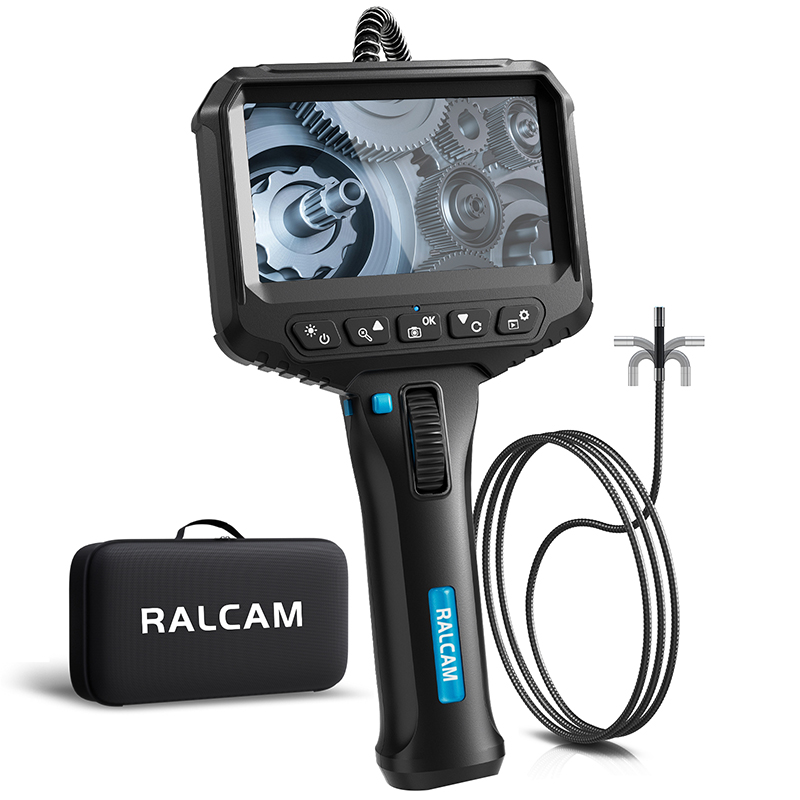
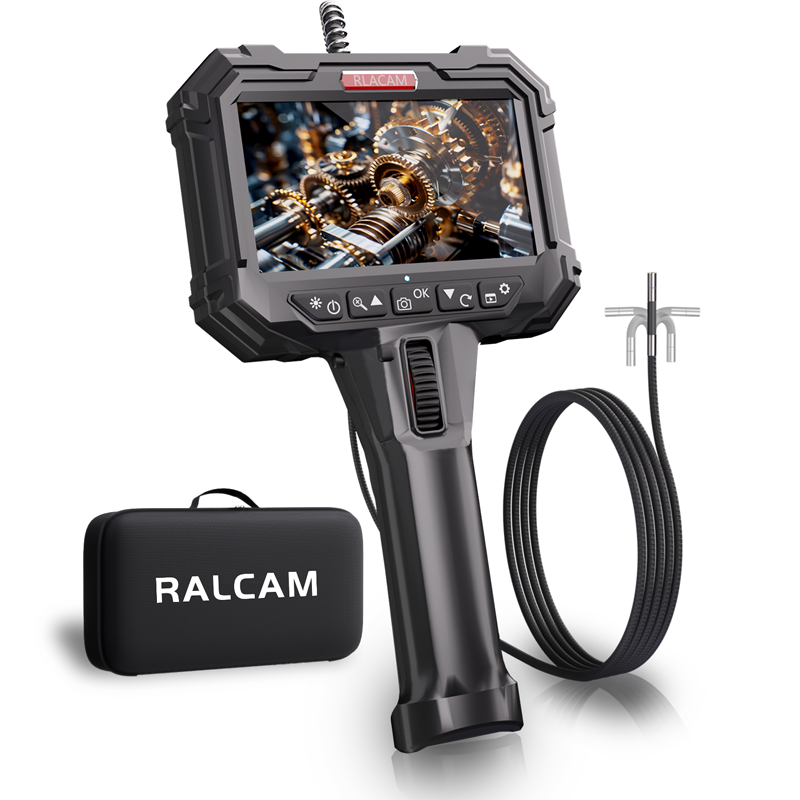
Susan
Susan  2026-09-14


An articulating video borescope should be evaluated against access diameter, route length, viewing angle, image needs, and the technician's actual inspection task.
Product selection begins before the probe enters an opening. A buyer needs the entry diameter, the distance to the target, the number and severity of bends, and the direction from which the surface must be viewed. The RALCAM F408A page lists an 8.5 mm probe, a 1 m probe length, and 180° articulation. Those values form a useful screening set, but they do not prove that every route is passable. Actual equipment geometry remains the governing condition.
The nominal opening should be larger than the probe, with additional allowance for safe insertion and withdrawal. A flange, connector, internal lip, or bend may create a tighter restriction than the visible entrance. Procurement teams should therefore record the complete access path rather than relying on one external measurement. An 8.5 mm specification is a comparison point, not permission to force the probe through an uncertain route.
A 1 m insertion length can suit compact equipment when the path and target fall within that reach. Extra unused length does not compensate for a blocked bend or an unsuitable approach angle. The listed 180° articulation should be considered together with the route, because steering authority is most valuable after the probe reaches a stable observation position. A simple sketch can expose conflicts before a trial inspection begins.
The F408A page declares 2 MP imaging and a 100° field of view, while its summary states support for iOS and Android phones. These points describe the capture and viewing arrangement at a high level. They should be assessed together with target size, working distance, lighting, screen conditions, and the records the organization needs to retain. An articulating video borescope is useful only when the complete viewing chain supports the inspection decision.
A 100° field of view can provide broad scene coverage, but a wider view does not automatically reveal small defects or distant surfaces. The operator still needs a suitable camera position and stable presentation of the relevant area. Buyers should define whether the task calls for a general condition survey, close visual confirmation, or repeatable documentation. That definition makes the imaging specification easier to interpret without turning it into an unsupported performance promise.
Phone support may reduce the need for a separate display, yet compatibility should be checked with the actual device, operating system, connector arrangement, and workplace policy. The product page also lists a 2200 mA battery. That value is relevant to planning, but it should not be converted into a runtime claim without a verified test condition. Teams can include charging status, phone readiness, storage space, and naming conventions in the pre-inspection checklist.
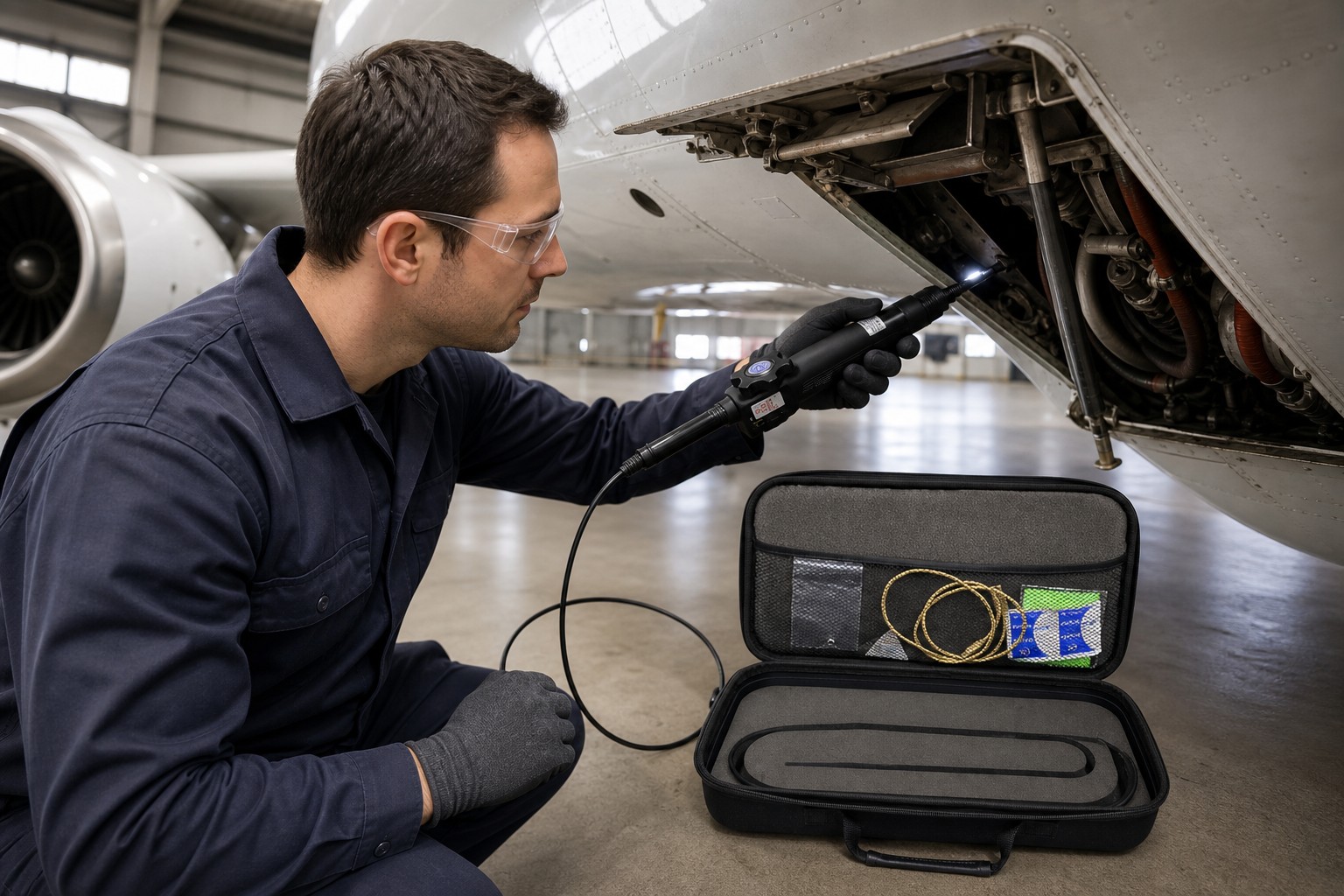
The selected product page names automotive inspection, aerospace maintenance, and HVAC inspection. These are broad application areas rather than universal approval for every component. A responsible evaluation maps the F408A configuration to one defined access point and one inspection objective. The same probe can face very different route geometry, cleanliness, lighting, and documentation requirements across the three environments.
For automotive inspection, the first comparison is between the 8.5 mm probe and the service opening. Technicians can then consider the 1 m route, the required steering direction, and whether a 100° view supports the target area. The goal is controlled observation without unnecessary disassembly, but the borescope does not replace the vehicle manufacturer's service instructions or a qualified diagnosis. Image files should be tied to the vehicle, component, location, and inspection date.
In aerospace maintenance, authorized procedures, trained personnel, controlled access, and equipment-specific instructions remain essential. The listed F408A dimensions can inform an initial fit review, but they do not establish regulatory suitability. For HVAC inspection, technicians should similarly isolate equipment as required, identify a safe access point, and avoid contact that could damage the probe or system. Each environment needs its own acceptance criteria even when the camera configuration is unchanged.
A structured trial is more informative than a general demonstration. The buyer can define the route, prepare a representative access point, specify the evidence that must be captured, and record whether the operator can position and withdraw the probe without excessive force. This approach separates product-page facts from assumptions and gives distributors or maintenance organizations a clear basis for a fit discussion.
| Decision factor | Verified F408A evidence | Buyer implication |
|---|---|---|
| Access opening | 8.5 mm probe | Measure the full route and allow safe clearance. |
| Reach and steering | 1 m probe and 180° articulation | Map bends, target distance, and viewing direction. |
| Imaging | 2 MP and 100° field of view | Define required detail and representative viewing conditions. |
| Viewing and power | iOS and Android support; 2200 mA battery | Verify the actual phone setup and operating routine. |
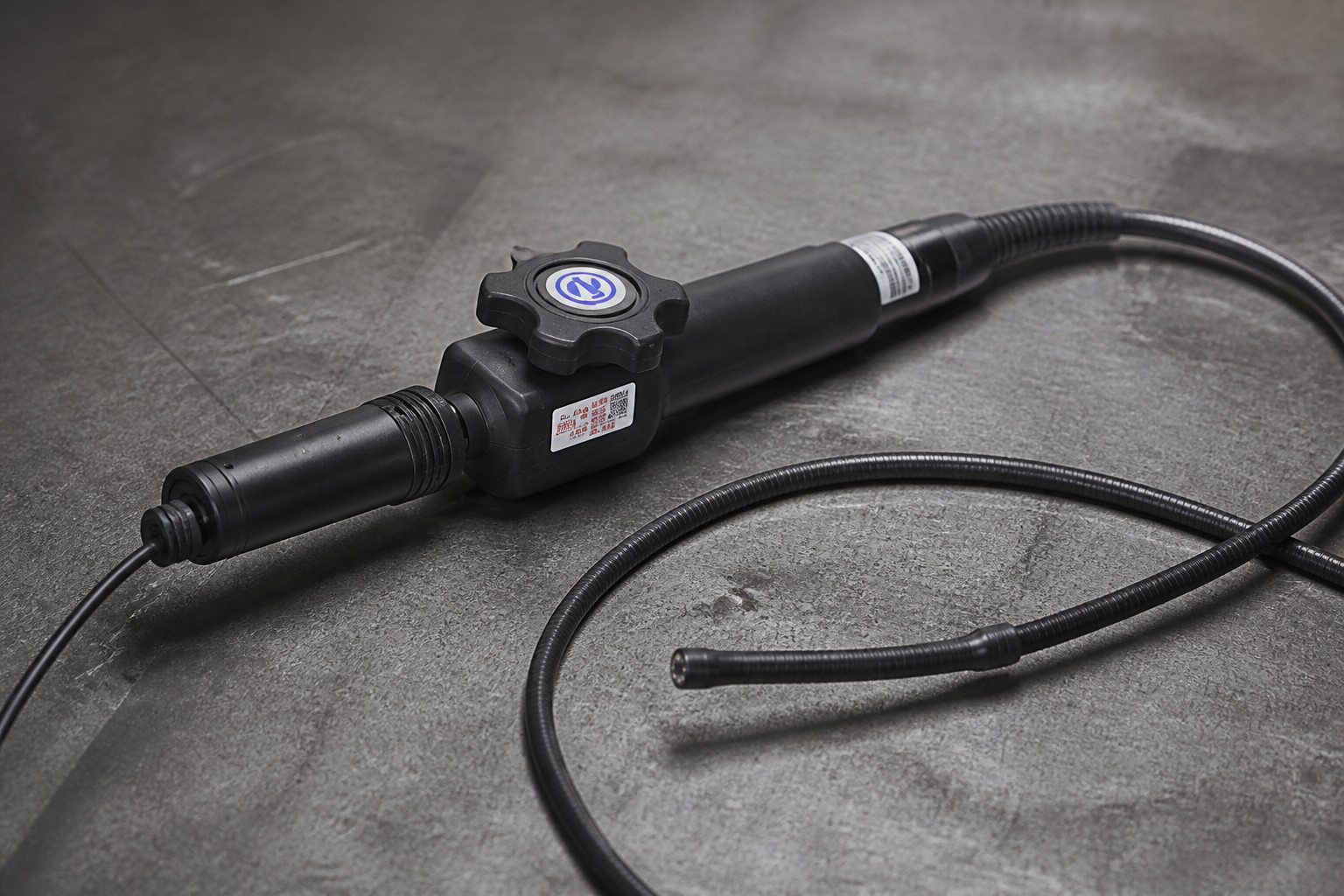
An articulating video borescope purchase should connect a verified configuration to an operating requirement. A useful inquiry therefore includes dimensions and workflow, not only a model name. Buyers can send the smallest opening, approximate route length, number of bends, target orientation, expected inspection setting, phone model, and required record format. That information helps the supplier discuss fit while leaving final acceptance with the responsible organization.
A distributor or OEM/ODM buyer can ask how the sample configuration corresponds to the published F408A specifications, how phone compatibility is confirmed, and which inspection conditions should be reproduced during evaluation. The trial record should distinguish verified facts, observed behavior, and unresolved requirements. It should also state when another probe diameter, length, viewing arrangement, or inspection method would be more appropriate.
The product page lists an 8.5 mm probe. A buyer should still measure the narrowest restriction along the entire route and provide clearance for controlled insertion and withdrawal.
The selected page declares 180° articulation. Practical usefulness depends on reaching a stable position where steering can direct the camera toward the intended surface.
The page identifies automotive inspection, aerospace maintenance, and HVAC inspection. Each application still requires route measurement, task-specific procedures, trained handling, and appropriate acceptance criteria.
No. The summary states support for iOS and Android phones, but the actual phone, operating system, connector arrangement, and workplace restrictions should be verified before deployment.
Include the access diameter, route length, bends, target direction, application, phone model, desired image record, and any OEM/ODM requirement. These details support a focused product-fit discussion.
Review the verified F408A product page, then share the access dimensions, target orientation, phone setup, and documentation needs with RALCAM for an evaluation-stage fit discussion.