Susan
Susan  2026-09-14


Choosing an articulating two-way automotive borescope starts with access clearance, viewing direction and a repeatable trial on the components it must inspect.
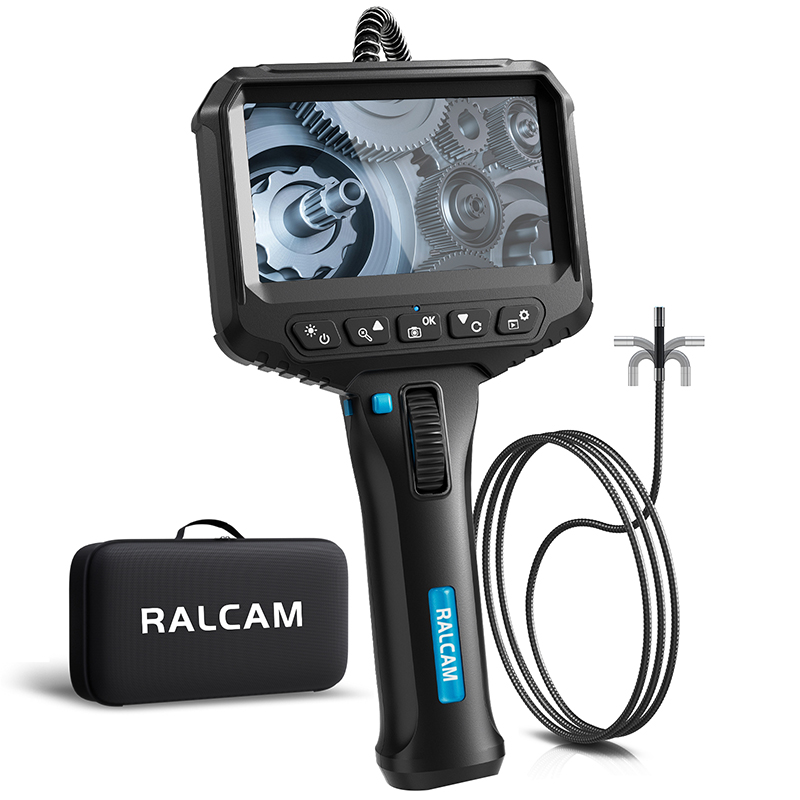
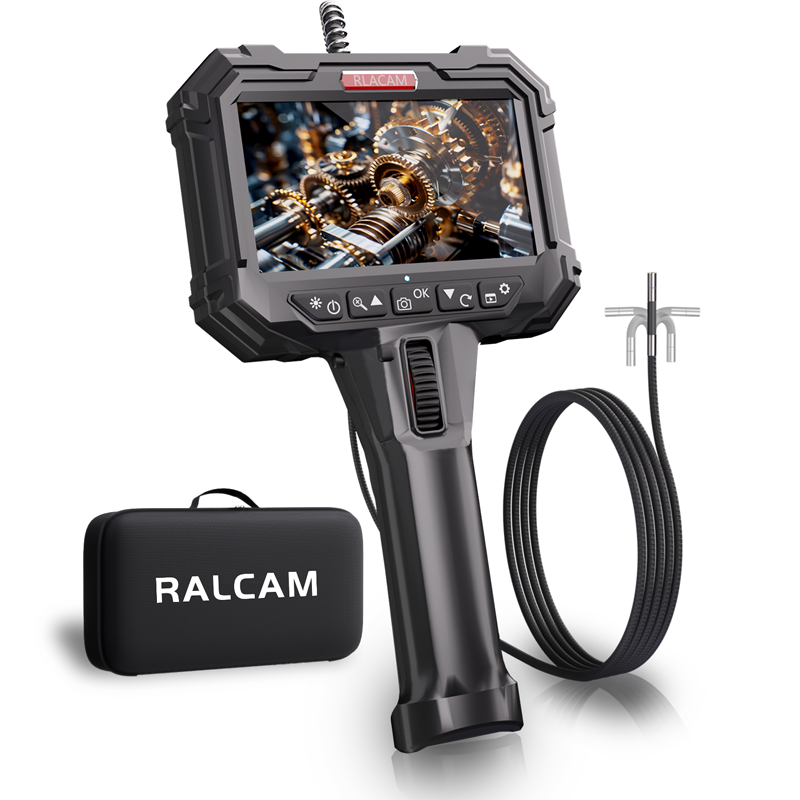
A suitable probe must reach the target without relying on force or an assumed route through the component. The RALCAM F405S-B is listed with a 5.5mm probe and a 1m snake tube. Those values provide an initial screening basis, but neither establishes compatibility with every opening, bend or internal obstruction. Buyers should begin with the equipment drawing or a representative component and identify where access becomes restricted.
For an articulating two-way automotive borescope, the narrowest opening is only one part of the access question. Clearance beyond the opening matters because the tip must be positioned to obtain a useful view. A workshop should establish whether the intended route leaves space for controlled movement, and whether the probe can be removed without catching. A component that admits the tip may still prevent the required viewing angle.
The relevant distance is the inspection route, not simply the straight-line separation between operator and target. Consider the entry position, changes in direction and the space needed to hold the display comfortably. The listed tube length should be checked against that route. Where access remains uncertain, a practical demonstration is more informative than treating nominal length as a promise of usable reach.
Steering and field of view answer different questions. Steering changes where the probe points; field of view describes the angular scene visible at a given position. The F405S-B summary lists two-way 180° steering, while the specifications list a 100° field of view. These should be assessed together on the intended task, rather than ranked independently as numbers.
Two-way movement may help approach a surface around a bend, but the surrounding cavity determines how much movement is possible. During evaluation, the operator should identify the target orientation and test whether it can be viewed without pressing the tip against adjacent material. The published steering description is not evidence of unrestricted movement inside every assembly or of full directional coverage.
A wide scene can help establish context, yet buyers also need to decide what detail must remain interpretable. The trial should therefore specify a surface or feature to locate, the available viewing position and the required visual evidence. Lighting, reflections and surface condition can change what is observable. A visible feature is an observation to evaluate through the relevant maintenance procedure, not an automatic diagnosis.
A useful comparison separates the published value from the check it supports. The following table summarizes product-specific evidence without converting it into a performance guarantee. Procurement teams can add trial results beside these factors when evaluating a sample. Unconfirmed operating limits or configuration details should remain open questions instead of being silently filled from another model.
| Decision factor | Published evidence | Practical check |
|---|---|---|
| Probe diameter | 5.5mm | Check the narrowest opening and the route beyond it; the entry diameter alone is insufficient. |
| Tube length | 1m in the product title | Measure the usable route and allow for the actual handling position. |
| Steering | Two-way 180° in the summary | Test the necessary viewing direction without forcing the tip against a wall. |
| Field of view | 100° in product specifications | Assess coverage and interpretable detail on representative surfaces. |
| Battery capacity | 6000mAh declared | Request configuration confirmation; capacity alone does not establish usable working time. |
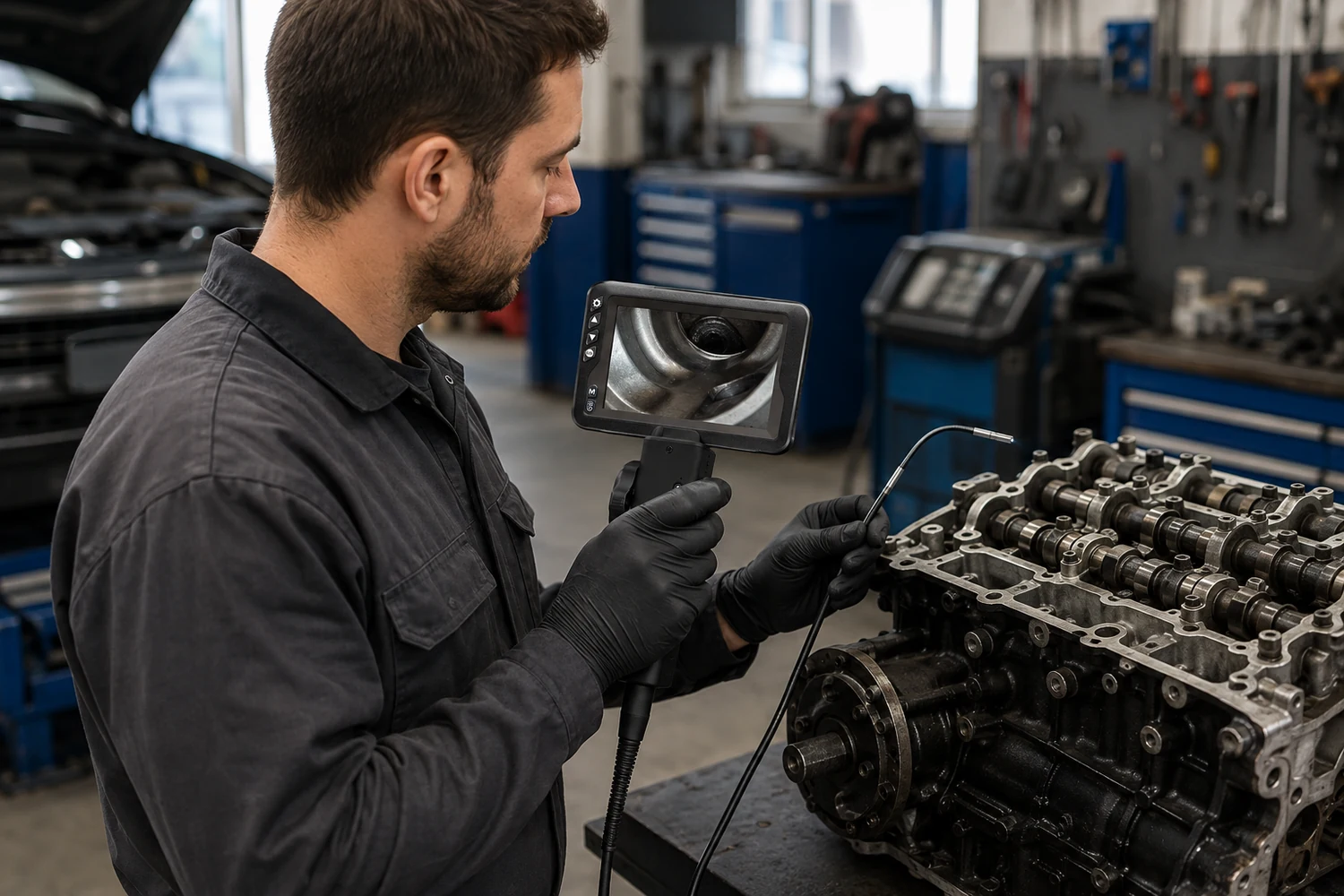
A trial should reproduce the access problem that prompted the purchase. The product page identifies combustion chambers and car evaporators among the intended inspection scenarios. For automotive inspection, the relevant test is whether the operator can reach the chosen area, obtain a useful view and repeat that observation. Equipment preparation and any acceptance decision should follow the applicable service procedure.
Select a representative component with a known area to observe, rather than an unusually open demonstration space. Record the entry point and the intended viewing direction before inserting the probe. Have the evaluator explain what can be seen and what remains hidden. Repeating the route helps reveal whether a successful view depended on an accidental position, and gives different buyers a common basis for comparing results.
The page also lists aircraft-engine inspection. That supports discussing aerospace maintenance as a possible application area, but it does not establish approval for a particular aircraft, engine or maintenance instruction. Organizations working in that setting must assess the applicable procedure, tool requirements and authorization independently. An application listing should not be presented as a certification or a replacement for the responsible maintenance decision.
For HVAC inspection, the product-specific evaporator example provides a practical starting point. Buyers should identify the actual access route and the surface they need to examine instead of assuming compatibility with every system. The same physical checks still apply: opening clearance, room to redirect the tip and the ability to obtain an interpretable view. The component and its preparation determine whether a proposed use is appropriate.
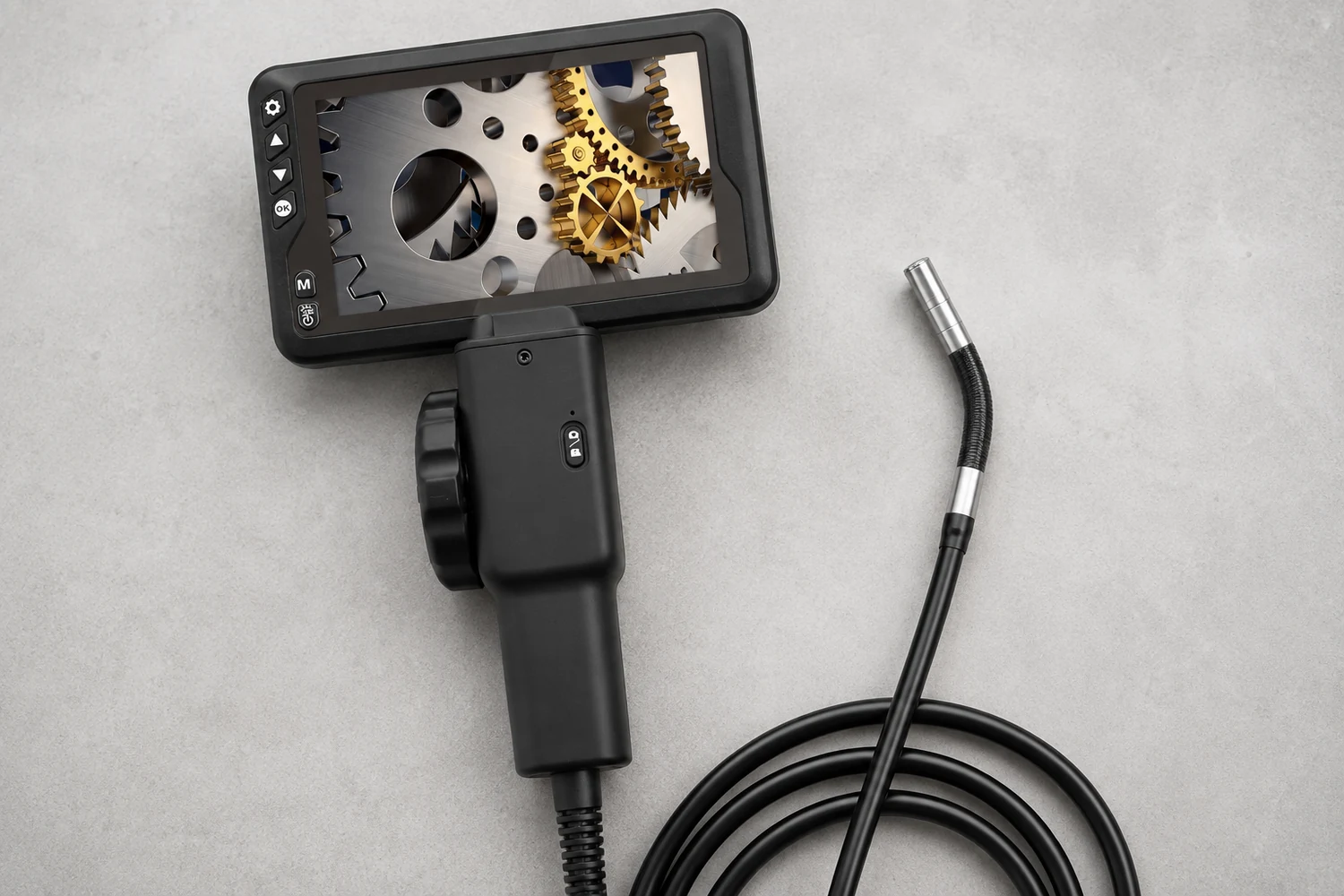
A procurement record should distinguish confirmed specifications from questions that still require an answer. The product page contains differing image-resolution descriptions, so a single resolution claim should not decide this evaluation without clarification. Likewise, a listed battery capacity is not a measured working-time commitment. Buyers benefit from receiving configuration-specific answers attached to the model they intend to order.
Record the model, source page, tested component and observations in the same document. Note where access was demonstrated and where it was not. Add any required documentation, operating limits or handling information to the inquiry rather than assuming those requirements are already satisfied. This creates a traceable decision and helps prevent a general marketing description from being treated as a task-specific acceptance result.
No. The listed diameter is an initial comparison point. Clearance, bends and the space needed to position and retrieve the tip must also be checked on the intended route.
No. Movement and visibility depend on the cavity and probe position. Buyers should demonstrate the required view rather than infer complete coverage from the steering specification.
It should establish whether the selected articulating two-way automotive borescope can reach, view and revisit the intended surface under the buyer's defined conditions. Unseen areas should remain explicitly recorded.
No. A listed application is not evidence of approval under a specific maintenance program. Applicable procedures and organizational requirements need separate verification.
Ask for the exact supplied configuration and consistent imaging specifications. The published page uses differing resolution descriptions, so that detail should be confirmed before it becomes a purchasing requirement.
Review the F405S-B product details alongside a representative access trial. Include the opening, route, target surface and unresolved configuration questions in the inquiry so the selection rests on demonstrated suitability.