Susan
Susan  2026-09-14


An automotive articulating borescope should be evaluated by access size, steering behavior, viewing geometry, probe length, and workflow fit before purchase.
Those factors connect the physical inspection route to what an operator can actually see and control, so buyers can compare a defined task with verified product evidence rather than relying on a single headline specification.
A useful evaluation begins with the smallest opening, the distance to the target, the bends along the route, and the surface that must be observed. Remote visual inspection is intended for areas that are difficult to view directly, but equipment suitability still depends on whether the probe can enter, advance, redirect, and return without being forced. Buyers should document those constraints before comparing models.
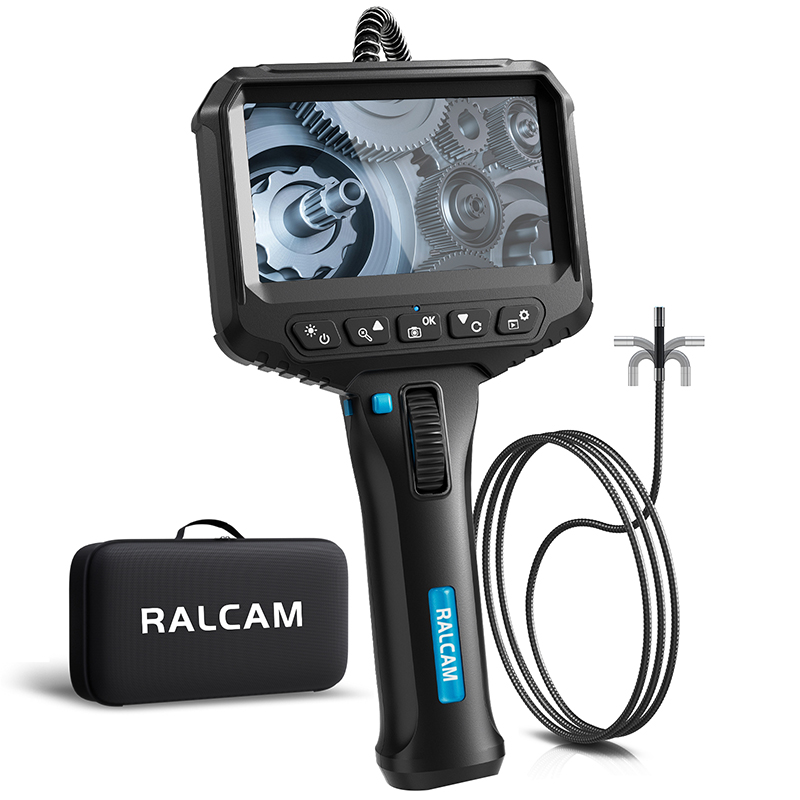
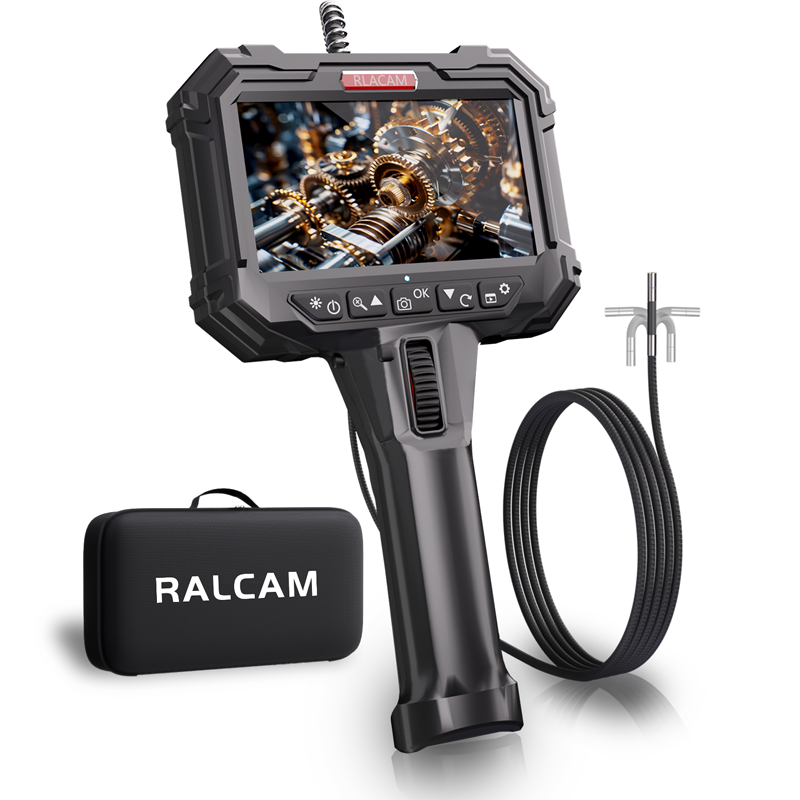
For the H408B, the corroborated 8.5mm probe diameter is the first access check. A passage that cannot safely accept that diameter is a mismatch regardless of other functions. The declared 1M probe length then provides a clear reach reference for short inspection paths. Route geometry, entry angle, and withdrawal space should be measured separately because nominal length alone does not describe a usable path.
The selected product page provides a concise evidence set for technical screening. The 8.5mm probe diameter and 180° articulation appear consistently enough to be treated as corroborated facts. The page also declares the H408B model, a 1M probe, an 80° field of view, and a 2600mAh battery. These values should be considered together rather than used as isolated quality claims.
The 180° articulation describes a steering capability that can help redirect the view after insertion, while the 80° field of view describes the declared viewing geometry. Neither value guarantees access to every target. The operator still needs enough clearance to bend the distal section, a route compatible with the cable, and a stable position from which to interpret the image.
| Decision factor | Verified evidence | Buyer implication |
|---|---|---|
| Access diameter | 8.5mm probe | Compare the full route with the specified diameter before trial use. |
| Steering | 180° articulation | Test redirection and withdrawal in a representative route. |
| Reach and view | 1M probe and 80° field of view | Confirm that the target distance and required viewing angle fit the task. |
| Portable power | 2600mAh battery | Validate runtime under the buyer's own capture and display workflow. |
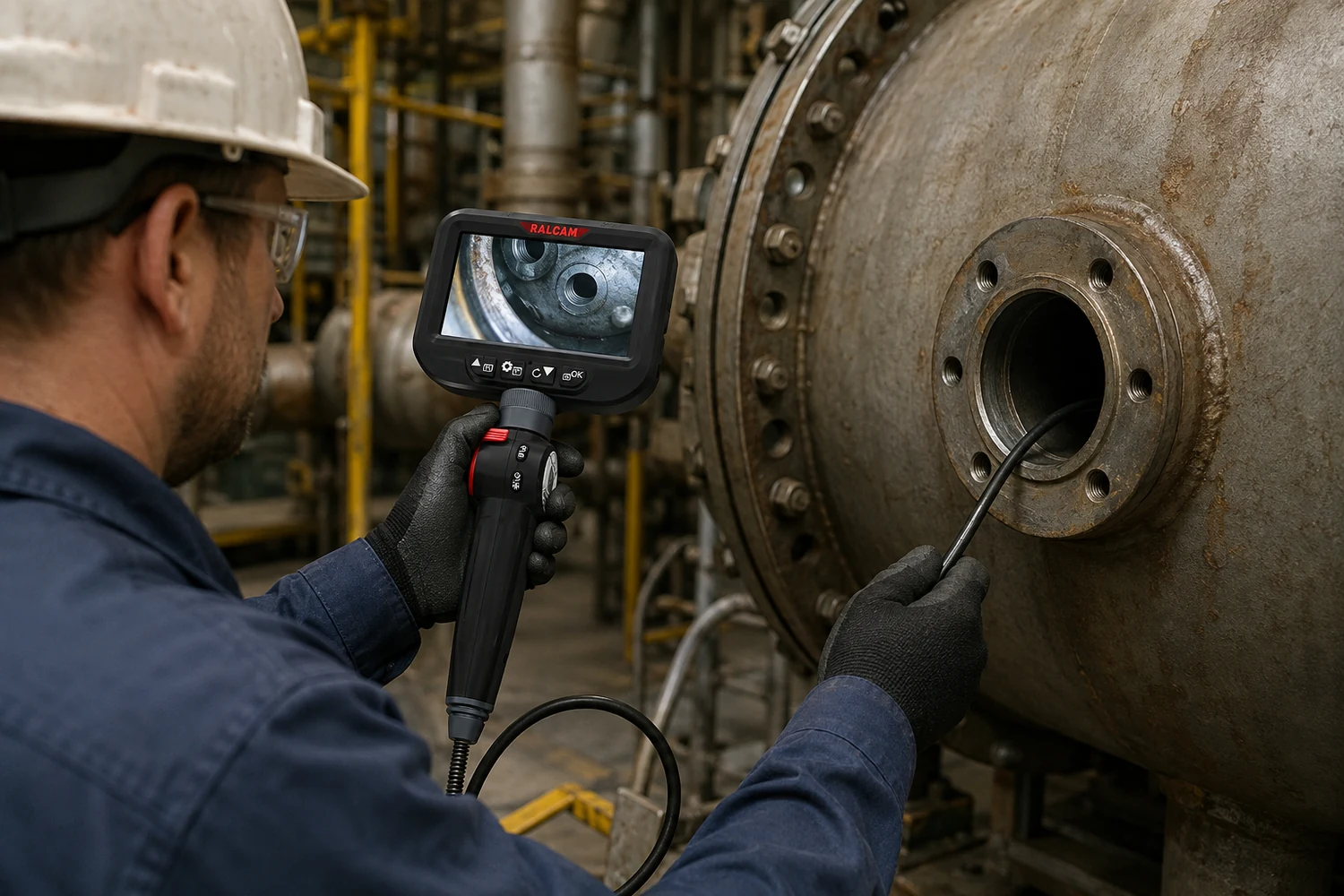
An automotive articulating borescope is most useful when steering helps the operator turn toward a defined inspection surface after the probe enters a restricted space. Articulation should not be treated as permission to push through an unsuitable bend. A representative mock-up or noncritical access route can show whether the distal section turns cleanly, whether the image remains interpretable, and whether the probe can be withdrawn without snagging.
Operators can first advance with the steering section relaxed, then redirect only when the target area is near. Slow movement and stable positioning generally make visual interpretation easier than continuous motion. The screen, control layout, and probe response should be assessed as one handling system, especially when gloves, limited body position, or a narrow service opening affect control.
A field trial should also include the return path. The team can confirm that the probe straightens, the cable does not bind, and the device can be removed without contacting sensitive edges. This practical cycle is more informative than testing articulation in free air alone.
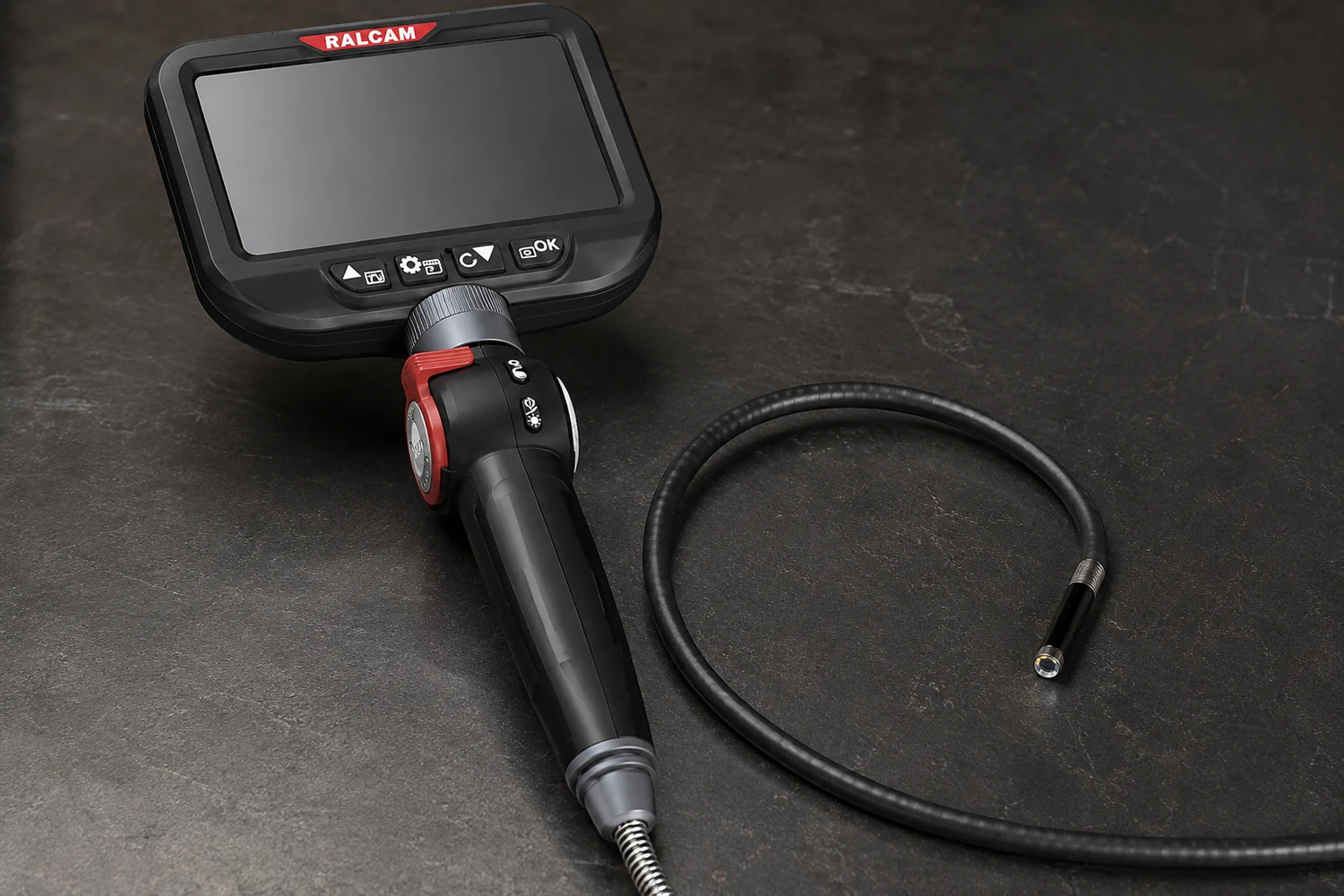
The product page identifies automotive inspection, pipeline inspection, and aerospace maintenance as application areas. These references support evaluation in those settings, but they do not remove the need for task-specific procedures. Each environment presents a different opening, route, target surface, contamination condition, and consequence of accidental contact.
For automotive inspection, buyers can map service openings around an engine or other vehicle assembly and define which internal surfaces must be observed. For pipeline inspection, the team should record pipe diameter, entry-port size, direction changes, deposits, and the distance to the suspected area. The declared product values then become acceptance criteria for a controlled demonstration.
In aerospace maintenance, internal visual work should follow the organization's approved maintenance instructions, access limits, operator qualifications, and reporting requirements. The H408B product evidence can support an initial equipment screen, but suitability for any specific aircraft component depends on the buyer's procedure and technical authority. No product-page statement replaces that review.
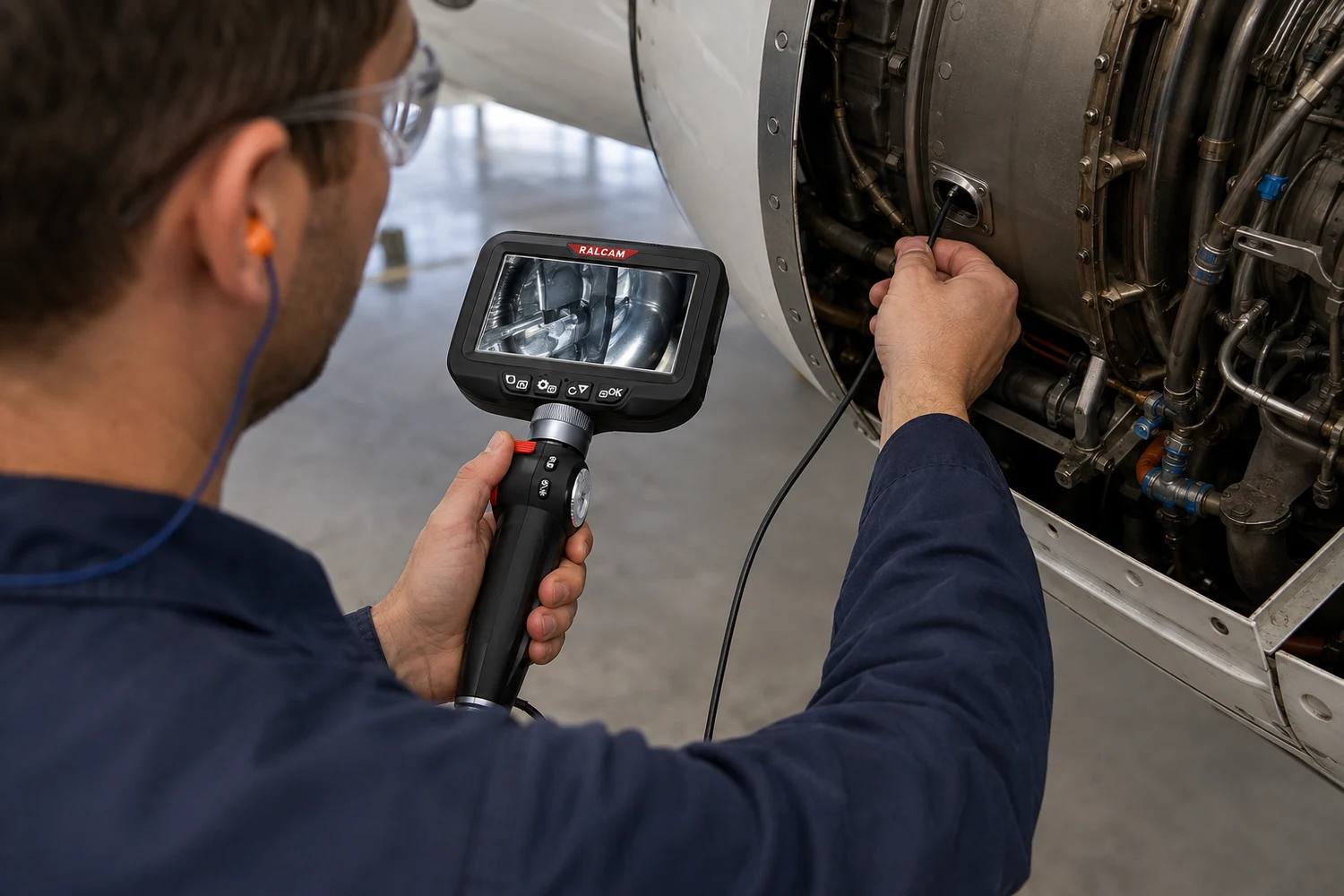
A repeatable trial turns product specifications into observable pass or fail conditions. The same route, target, lighting condition, operator task, and evidence requirement should be used for every candidate. That approach gives procurement, maintenance, and quality teams a shared record instead of separate impressions.
For an automotive articulating borescope, this workflow exposes the interaction between access diameter, reach, steering, and viewing geometry. It also shows whether different operators can achieve a consistent result, which matters for repair networks, distributors, and organizations considering a larger deployment.
Procurement questions should connect the product evidence to the intended environment. Buyers can provide representative access dimensions, expected route length, target orientation, operating conditions, display needs, and the number of operators. They can then ask the supplier to identify which points are supported by the selected model and which require a separate configuration or test.
The product page presents the H408B within a factory, wholesale, and OEM/ODM context. Distributors and private-label buyers should therefore separate verified device specifications from commercial questions such as packaging, branding, documentation, sample approval, and production arrangements. Those commercial details should be confirmed directly rather than inferred from the technical page.
The complete route should safely accept the corroborated 8.5mm probe diameter. Buyers should consider bends, edges, fittings, and clearance for withdrawal, not only the first opening.
No. It describes the verified articulation value, while actual access depends on route geometry, clearance, probe position, target angle, and operator handling.
No. The selected page also names pipeline inspection and aerospace maintenance. Each use still requires a task-specific suitability review and an appropriate operating procedure.
A field trial shows whether the automotive articulating borescope fits the real access route and whether operators can steer, view, and withdraw it consistently under representative conditions.
It should include the intended application, access dimensions, target surfaces, expected quantities, documentation needs, sample-validation plan, and any packaging or branding requirements that need direct confirmation.
Buyers evaluating the H408B can share their access dimensions, route, target, and trial criteria with RALCAM. Review the verified product information and request direct confirmation of any project, distributor, wholesale, or OEM/ODM requirements before ordering.