Susan
Susan  2026-09-14


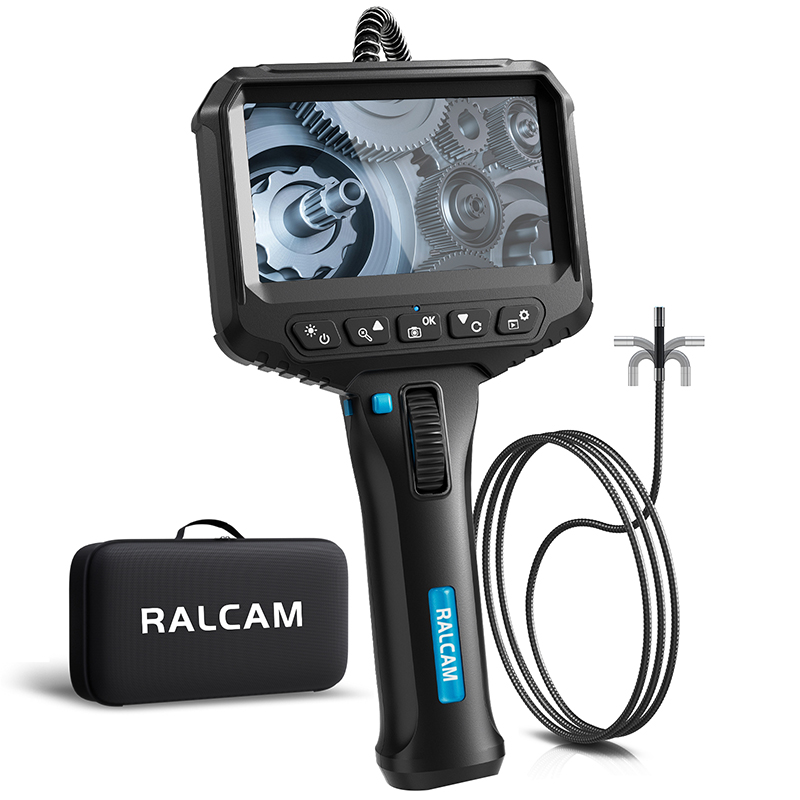
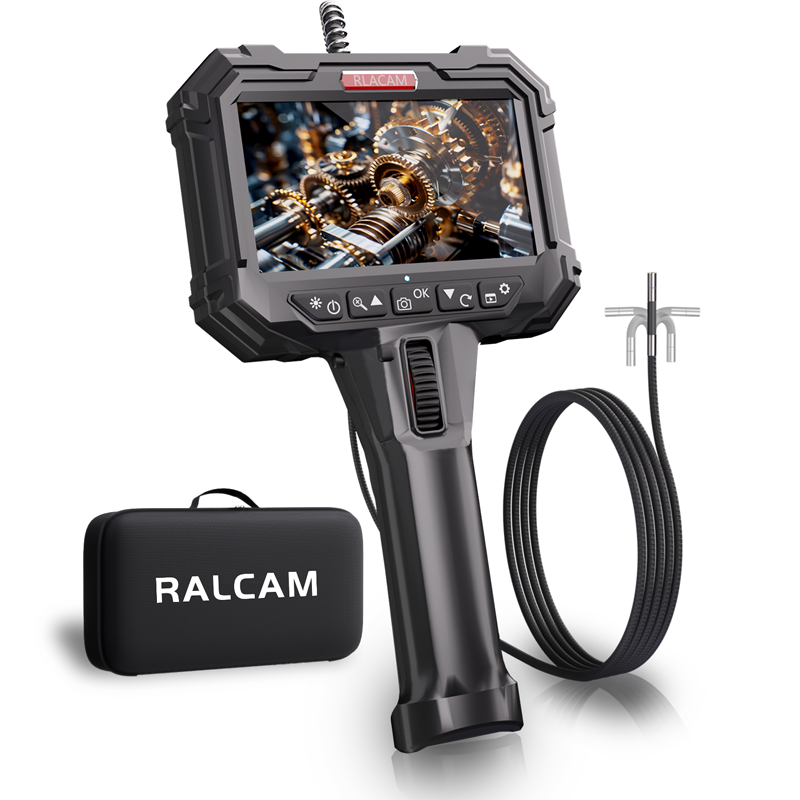
A two-way borescope fits confined inspection work when its access diameter, articulation, viewing angle, and smartphone workflow match the planned route.
The RALCAM F408A provides a defined set of product-page specifications that buyers can compare with a real opening, insertion path, target location, and inspection procedure before making a sourcing decision.
The first selection question is whether the device can physically travel from the entry point to the viewing position. A specification can be useful only when it is compared with the complete route, including the smallest opening, bends, internal obstructions, target distance, and the space needed to steer or withdraw the probe. This route-based review prevents a buyer from treating one prominent number as proof of task suitability.
The F408A product evidence lists an 8.5 mm probe diameter. Buyers should compare that value with the narrowest verified opening rather than the nominal size of a larger access port. Clearance is also needed for controlled insertion and withdrawal, particularly when an opening has an irregular edge, contamination, or a bend immediately behind it. The listed diameter therefore supports an access check; it does not replace one.
A 1 m probe length is declared for this model. The useful comparison is not simply whether the target is less than that distance from the opening. The buyer should account for the actual curved route, the portion kept outside for handling, and the stable working position of the operator and connected phone. A measured route gives procurement teams a more reliable basis than an estimated straight-line distance.
After access is established, camera placement becomes the next constraint. Articulation describes the steering capability, while field of view describes how much of the scene can appear from a given position. These values answer different questions, and both need to be considered with the shape of the cavity and the required inspection coverage.
The product page corroborates 180° articulation. In a practical review, a buyer should map that steering behavior to the directions that must be observed after insertion. A two-way borescope can help reposition the camera without rotating the entire access assembly, but the real route, available bending space, and operator technique still determine whether the target can be framed consistently.
The declared 100° field of view describes the viewing cone, not the guaranteed visibility of every surface. A wider scene can help orient the operator, while target distance, lighting, surface reflectivity, contamination, and camera position still affect what can be interpreted. Buyers should define which surfaces must be seen, from which direction, and under which acceptance procedure before treating the viewing angle as sufficient.
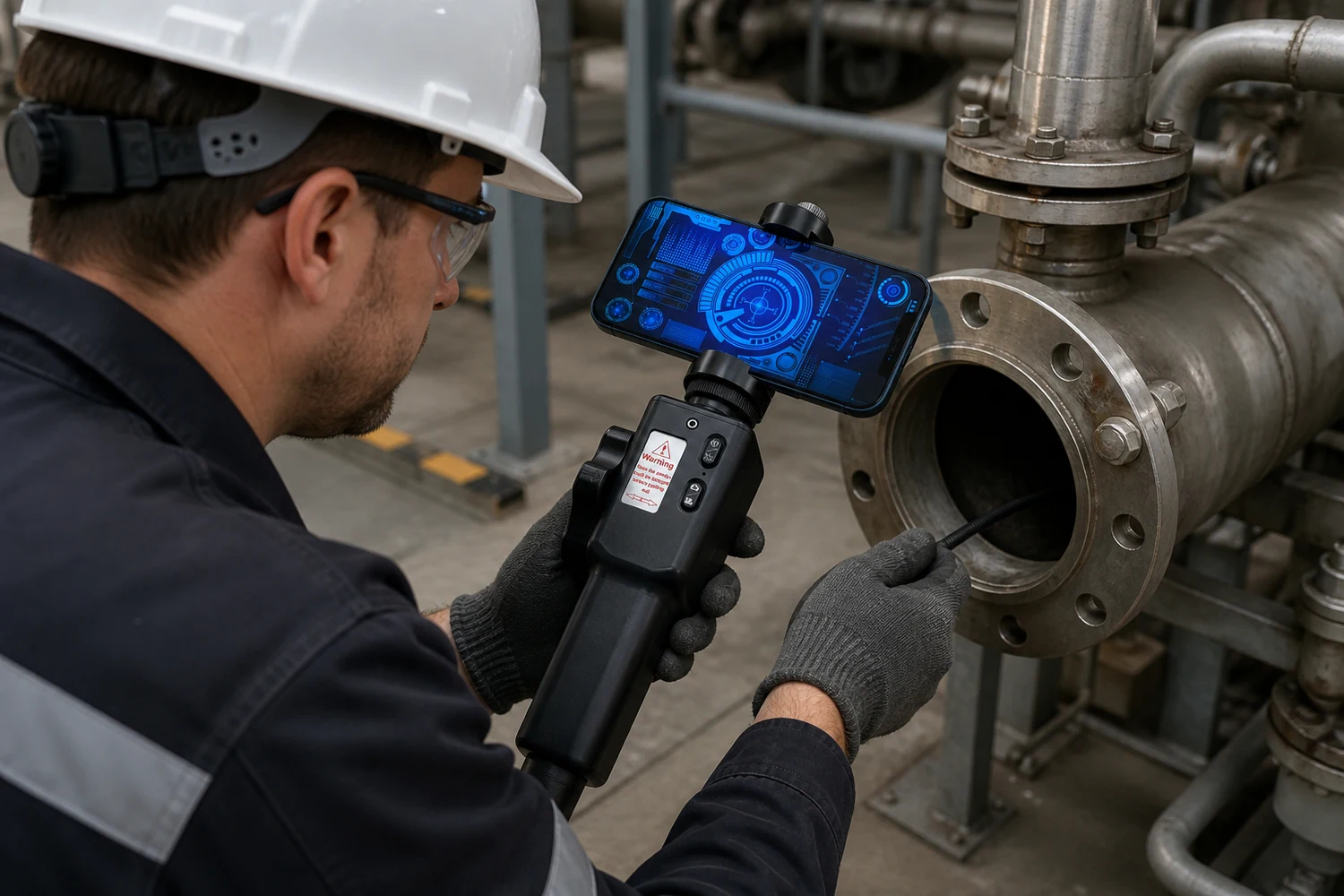
Application labels are useful starting points, but they are not universal approvals. The selected RALCAM page identifies three specific contexts. Each should be translated into an access route, viewing objective, handling method, and documentation requirement before a device is accepted for a particular task.
For automotive inspection, the entry point may lead through a component opening toward an internal surface that must be viewed from a controlled direction. The buyer should identify the smallest passage, the necessary insertion length, the target orientation, and the procedure used to interpret the image. The F408A specifications can then be compared with that defined route without assuming that one vehicle category represents every engine or component.
For pipeline inspection, bends, deposits, branch geometry, surface condition, and the ability to retrieve the probe can change the task. A 1 m declared length and 8.5 mm diameter provide concrete comparison points, while the real pipe path still determines suitability. The selected product page supports the application context but does not state a universal pipe size, material, or defect-detection limit.
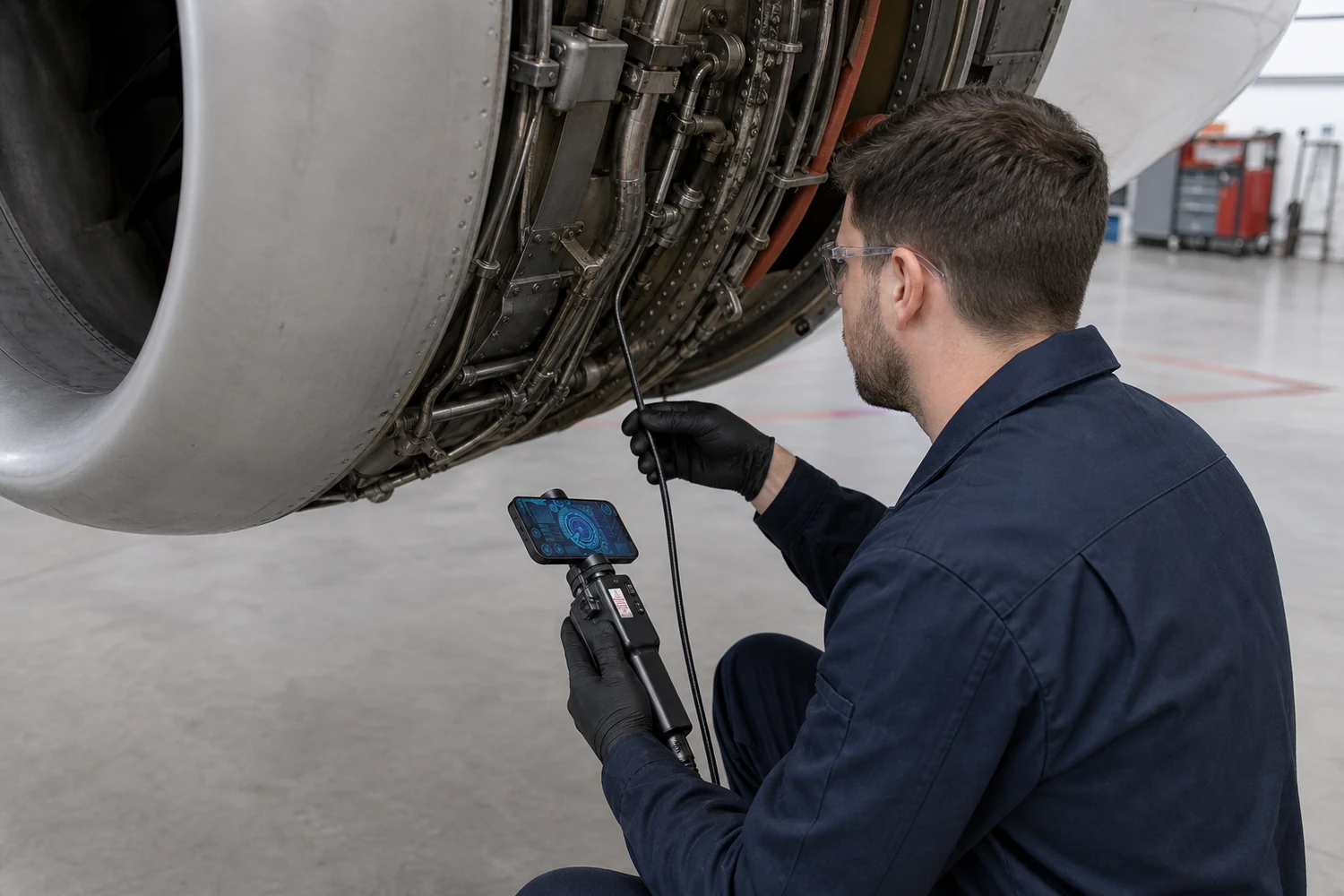
The product page also identifies aerospace maintenance. In that environment, a visual tool should be selected and used within the applicable maintenance instructions, inspection coverage requirements, personnel qualifications, and acceptance criteria. A camera image can support observation, but it does not independently establish component serviceability. Buyers should therefore separate device configuration from the authority of the procedure that governs the inspection.
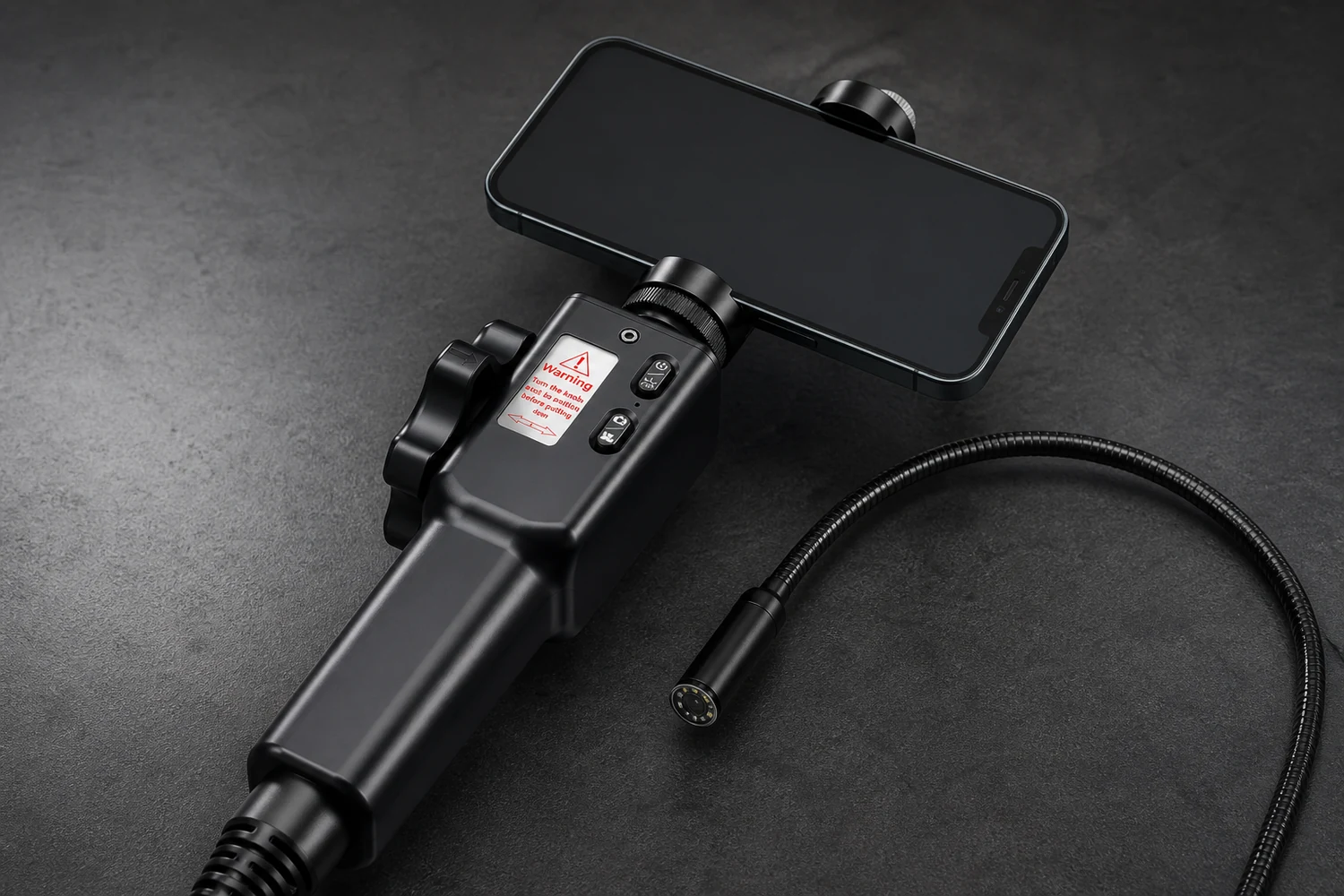
This two-way borescope lists 2M-pixel imaging and a smartphone-oriented viewing configuration. These facts describe the F408A setup, while the buyer must still test how the phone is positioned, how the live view supports probe handling, and how observations are documented. Screen size, viewing conditions, operator movement, and the inspection procedure can influence the usability of the complete workflow.
A 2200mA battery specification is also declared. It is a useful sourcing field, but it should not be converted into an unsupported runtime promise. A buyer can instead test the planned working session with the selected phone, viewing behavior, and environmental conditions, then define charging and readiness practices for the intended operation.
A disciplined evaluation can be organized as a short sequence:
A shared comparison table keeps technical, procurement, and service teams focused on the same evidence. The verified values below should be read as configuration fields to test against the intended task, not as a guarantee of performance in every cavity or operating condition.
| Decision factor | Verified evidence | Buyer implication |
|---|---|---|
| Model control | F408A | Keep quotations, samples, and trials tied to the same configuration. |
| Entry access | 8.5 mm probe diameter | Compare with the narrowest measured opening and required clearance. |
| Reach | 1 m probe length | Map the curved route and retain a stable handling section. |
| Steering | 180° articulation | Test whether the target can be framed along the actual path. |
| Viewing cone | 100° field of view | Define required coverage, direction, and target distance. |
| Image workflow | 2M pixels with smartphone viewing | Trial the viewing and documentation process as one system. |
| Power planning | 2200mA battery | Validate a representative session instead of assuming runtime. |
This structure gives a buyer a traceable way to decide whether the two-way borescope should proceed to a sample trial. It also makes gaps visible: when the route, viewing objective, phone workflow, or acceptance procedure is not yet defined, the next action is to clarify the requirement rather than infer a result from the device specification.
No. A nominally equal opening may not provide practical clearance for insertion, steering, contamination, irregular edges, or safe withdrawal. Buyers should measure the smallest actual passage and test a representative route.
It is the product-page steering specification for the F408A. Selection still depends on whether that directional movement can place the camera at the required target within the available internal space.
A viewing angle does not define defect visibility or acceptance. Coverage, target distance, lighting, surface condition, image interpretation, and the governing procedure must all be considered.
No. The verified evidence lists 2200mA, but this article does not convert that value into a runtime claim. A representative workflow trial should establish session planning and charging practice.
Useful inputs include the smallest opening, curved travel distance, target location, required viewing direction, phone workflow, documentation needs, and the applicable inspection procedure. Those facts support a focused product-fit discussion.
Compare the access path and viewing objective with the verified F408A configuration, then share representative dimensions with RALCAM for an evidence-based product-fit discussion.